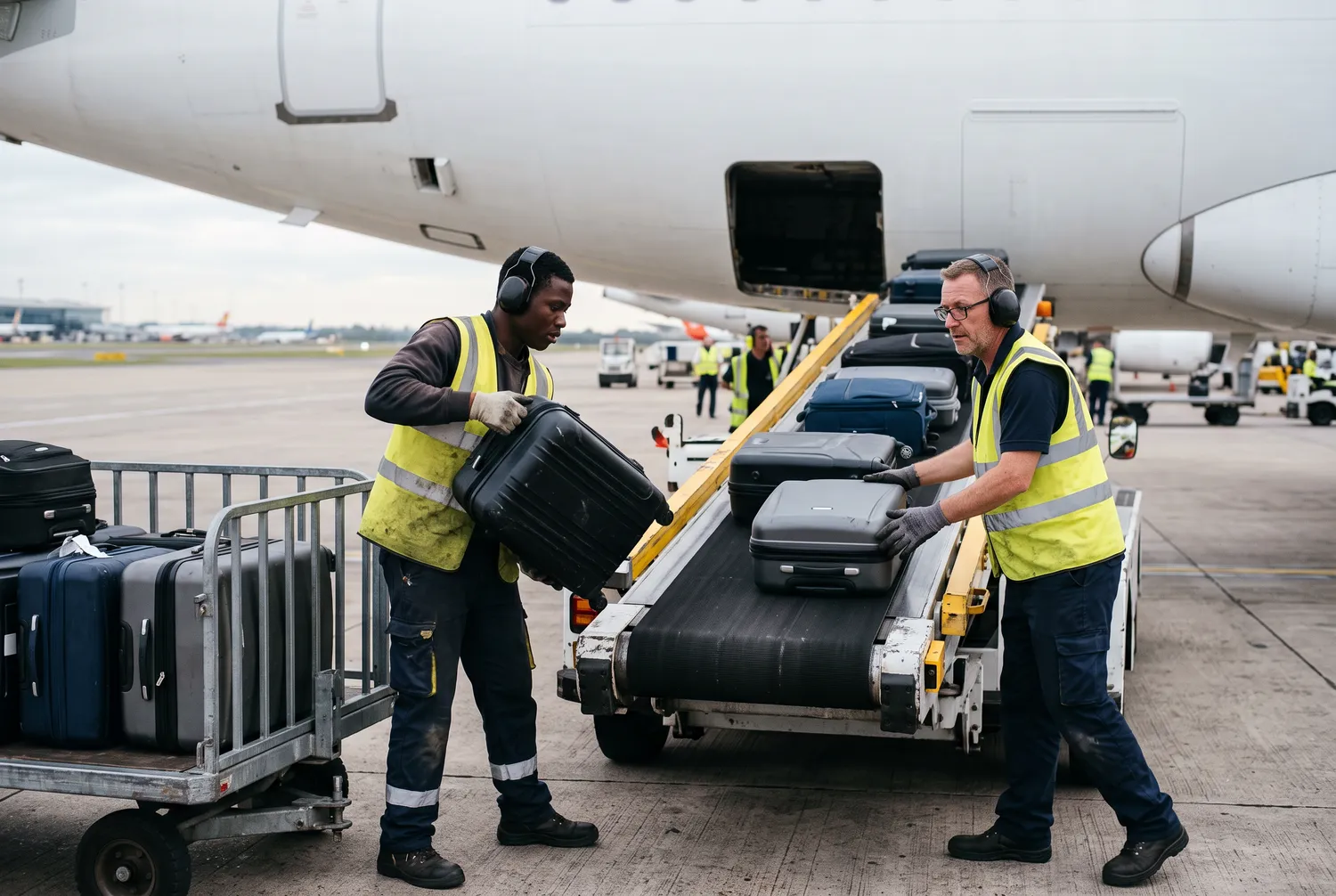
An intern or new joiner at an airport is not expected to know the job. They are expected to be ready to learn it: on time, presentable, clear when they speak and careful about rules. These are habits, and habits can be practised before you start.
Skills aviation service employers may look for
Every employer sets its own criteria. These are qualities that entry-level advertisements for passenger services, ground handling and guest services commonly describe.
- Punctuality. A flight will not wait for a late agent.
- Following procedures exactly, including the ones that seem unnecessary.
- Speaking up. Reporting a hazard, a mistake or something that looks wrong.
- Calm with customers, especially tired, worried or angry ones.
- Clear spoken communication in the working language.
- Teamwork across departments.
- Stamina for shifts, standing and walking.
- Respect for people of every background, and for confidentiality.
Professional grooming
In aviation, appearance is partly about the customer and partly about safety and hygiene. Each employer publishes its own standard, and you follow theirs once you join. Until then, these general principles are a safe guide.
- Clean and neat. Clothes pressed, shoes clean, hair tidy and away from the face.
- Personal hygiene. You will work close to colleagues and passengers for hours.
- Simple. Light fragrance or none, and minimal jewellery. On the ramp, loose items and jewellery can be a hazard.
- Practical footwear. Closed, comfortable shoes you can stand in all day.
- Your pass and name badge visible, where they are required.
Grooming standards should respect religious dress, cultural practice and individual needs. If a standard is unclear or you need an adjustment, ask the employer; that is a normal conversation.
Communication
Speaking
- Speak a little slower than you think you need to. Many listeners are not using their first language.
- Use plain words. "Your flight leaves from gate 12" is better than jargon.
- Say what you can do before what you cannot.
Listening
- Let the person finish.
- Repeat the key detail back: the name, the flight number, the time.
- If you did not understand, ask. Guessing causes errors.
Letters and numbers
Aviation staff spell names and codes with the international spelling alphabet (Alfa, Bravo, Charlie…), because letters such as B, D and P sound alike on a radio or a telephone. Learning it takes an evening and is useful from your first day.
Writing
Handover notes and messages should be short, factual and complete: what happened, when, who was told, what is still open.
What to learn before you apply for an internship
- Who does what at an airport, and the difference between landside and airside.
- The passenger journey from check-in to baggage reclaim.
- The everyday words aviation teams use.
- Why procedures and reporting matter to safety.
- What documents and checks an airport pass may involve where you live.
InternAVIA's free course covers the first four in about 6 hours, including a module on communicating professionally.
A readiness checklist
- I can explain what the role does in two sentences.
- I can reach the workplace for the earliest shift.
- My identity and education documents are in order.
- I can spell my name with the spelling alphabet.
- I have one plain, clean, pressed outfit and comfortable closed shoes.
- I know who to tell if I see something unsafe.
Next: preparing for an aviation interview.
Build the basics first. The foundations course is free.
See Aviation Foundations →