People often say they want to "work in aviation" as if it were one company. It is not. A single flight depends on several separate organisations, each with its own staff, its own rules and its own way in. Knowing who does what is the first useful thing a beginner can learn, because it tells you where the job you are imagining actually sits.
The organisations behind one flight
- Airlines sell the seat, operate the aircraft and employ the flight crew and cabin crew. Many also employ their own airport staff; many others contract that work out.
- Airport operators run the buildings and the airfield: terminals, runways, stands, car parks, and the control room that coordinates them.
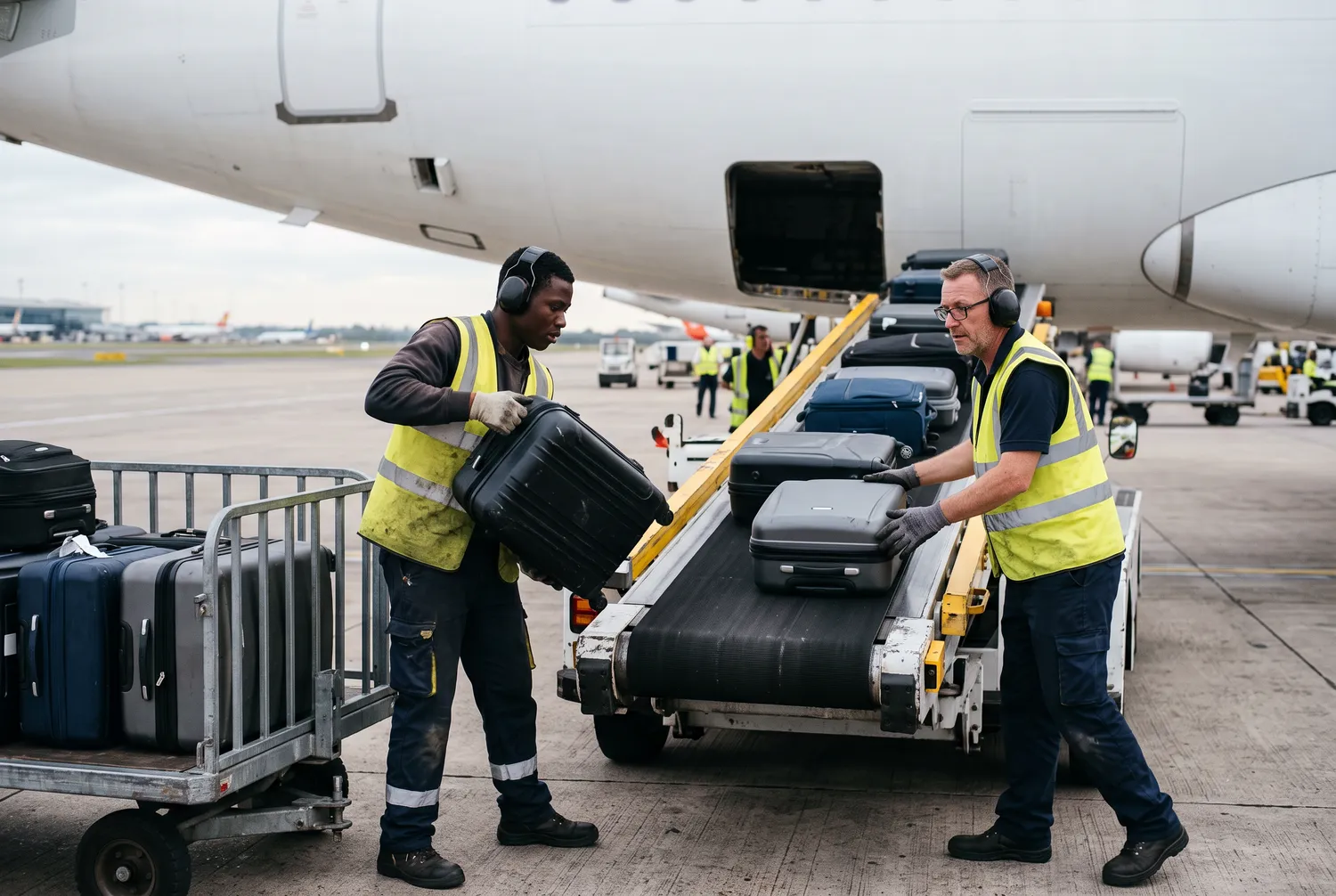
- Ground handling companies do much of the work passengers see and do not see: check-in, boarding, baggage, aircraft loading, pushback, cleaning and passenger assistance. They work for airlines under contract.
- Air navigation service providers employ the air traffic controllers who separate aircraft in the air and on the ground.
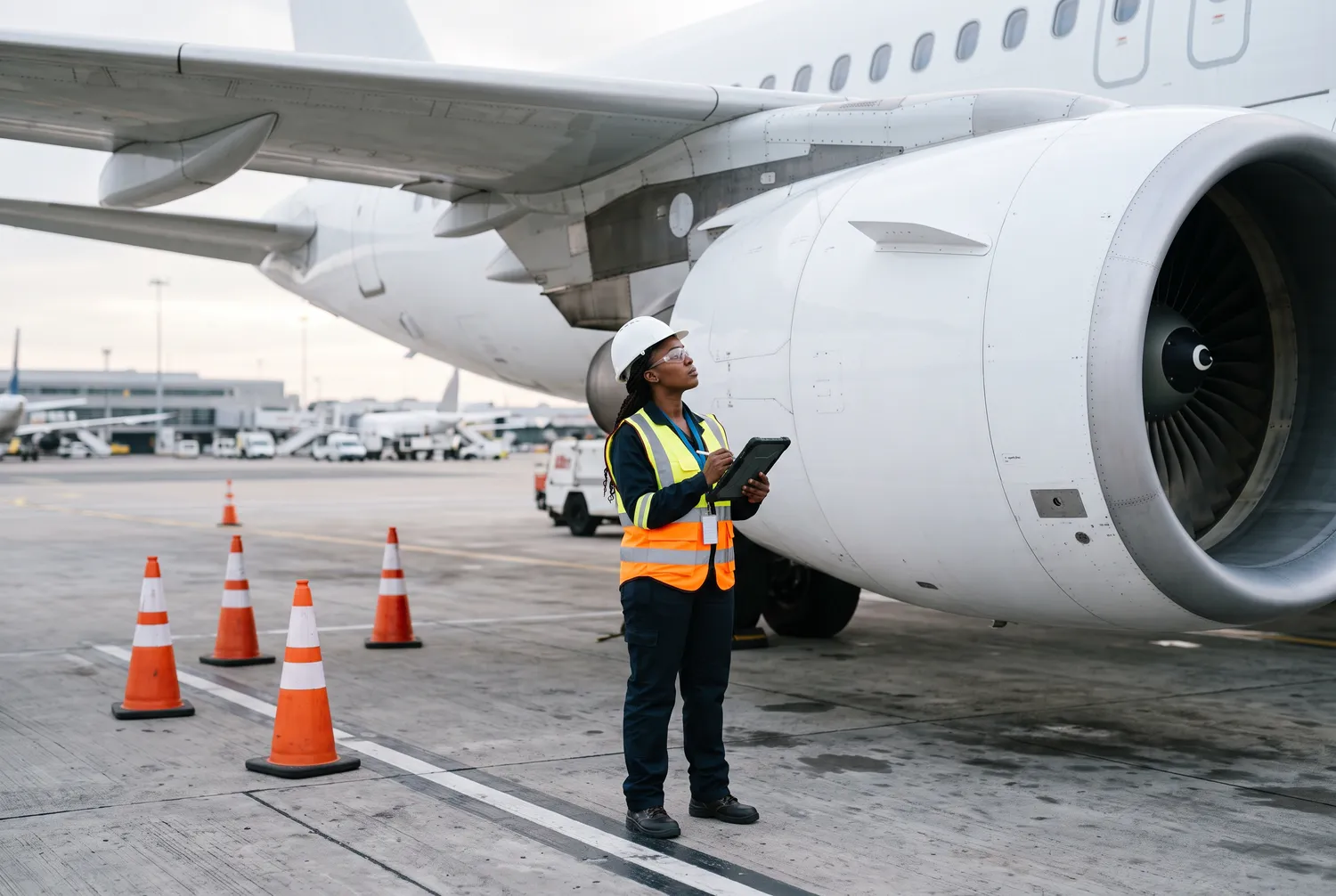
- Maintenance organisations inspect, repair and release aircraft to fly.
- Cargo operators and freight forwarders move goods rather than people, through their own terminals and paperwork.
- Security, border and customs agencies screen people and bags and decide who and what may cross a border. Some are government bodies, some are contractors.
- Catering, retail, lounges and hospitality companies serve passengers in the terminal and supply the aircraft.
- Regulators set and check the rules. Each country has a national aviation authority; international standards are agreed through the International Civil Aviation Organization (ICAO), a United Nations agency.
The main families of jobs
Most entry-level aviation work falls into a handful of families. The same job title can mean slightly different duties from one employer to the next, so read the description, not only the title.
- Passenger services: check-in, bag drop, boarding gates, arrivals, transfer desks, ticketing and help for passengers who need assistance.
- Ramp and ground operations: loading and unloading, guiding aircraft on to stand, operating ground equipment, turnaround coordination.
- Airport operations: terminal duty teams, the operations control centre, airside safety, stand planning.
- Cargo and logistics: acceptance, documentation, warehouse handling, build-up and breakdown of loads.
- Cabin crew: safety and service on board.
- Security: screening passengers, staff, bags and cargo.
- Hospitality and guest services: lounges, meet-and-assist, retail and food service.
- Technical and licensed roles: pilots, air traffic controllers, aircraft maintenance engineers and flight dispatchers. These need a licence or approval from an aviation authority.
- Office roles: scheduling, revenue, customer relations, safety management, training, human resources and finance.
Two words worth learning on day one
Landside is the public part of an airport, before security. Airside is everything beyond it, including the gates and the airfield. People who work airside hold an airport pass issued after background checks, and they follow stricter rules about what they carry and where they go. Many entry-level roles are airside, which is one reason recruitment in aviation can take longer than in other industries.
What nearly every aviation job has in common
- Procedures come first. Staff follow written procedures and report what goes wrong. Improvising is not rewarded.
- The clock matters. Flights run to the minute, and airports work early mornings, nights, weekends and public holidays.
- You depend on other teams. A delay at check-in becomes a problem at the gate and then on the ramp.
- Clear speech matters. Instructions are passed quickly, often by radio, often between people whose first languages differ.
Where to go from here
If this map is new to you, a short structured course is the fastest way to fill it in. InternAVIA's free course, Aviation Foundations, covers the organisations, the airport, the passenger journey, the job families and the safety mindset in about 6 hours.
Aviation Foundations is free: the lessons, the assessment and the certificate.
See the free course →Then read how to start a career in aviation for the routes into each family of jobs.